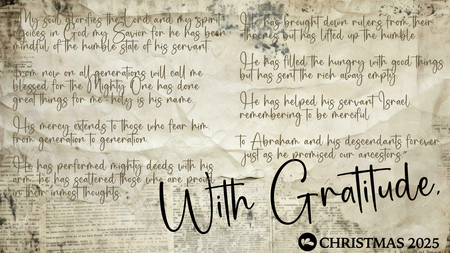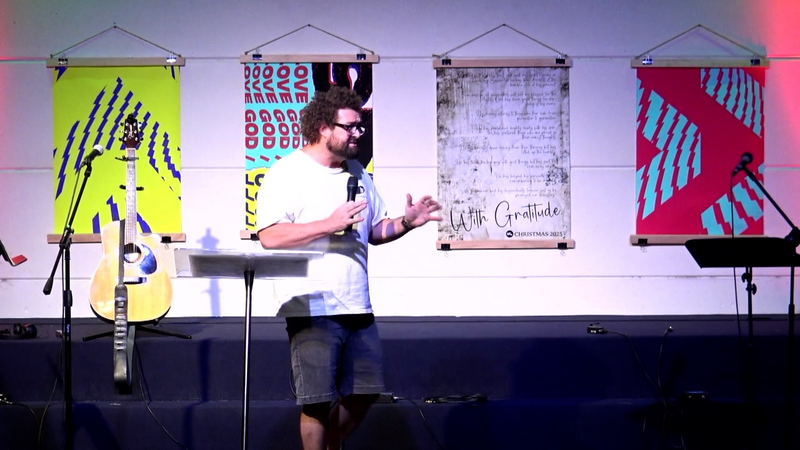
This message invites us into one of the most intimate and overlooked moments of the Christmas story: when two women, both carrying impossible pregnancies, found refuge in each other's company.
Mary and Elizabeth's encounter in Luke 1:39-56 reveals that gratitude isn't born from perfect circumstances, but from recognising God's grace working within us. Elizabeth, who had carried the shame of barrenness for years, could have responded to her miracle with entitlement or bitterness about the waiting. Instead, she burst into Spirit-filled praise, demonstrating that true gratitude begins internally—with the Holy Spirit's work in our hearts—before it ever becomes external expression.
We're challenged to consider how God specialises in using the ordinary and impossible as His creative playground. Whether we're navigating seasons of uncertainty, excitement mixed with fear, or long periods of waiting, this passage reminds us that gratitude grows when we stop asking 'what about me?' and start marvelling at how good God has been.
The sacred friendship between these two women also highlights something we often overlook: sometimes the grace of God is simply the person sitting next to us, holding space for our hopes and fears over a cup of tea.
Discussion questions:
1. Elizabeth and Mary found sacred refuge in each other during impossible circumstances. Who in your life serves as that kind of spiritual companion, and how might you intentionally cultivate such friendships?
2. How does the distinction between feeling grateful and actively giving thanks challenge you to express gratitude more intentionally in your relationships and worship?
3. In what areas of your life might you be resenting seasons of waiting rather than rejoicing in a God who always keeps His word, even when the timing doesn't match your expectations?
4. How does the reality that 'gratitude and entitlement cannot coexist' expose areas where you might be viewing God's blessings as compensation or rewards rather than grace?